Player Safety
Player Safety
Player safety is one of a coach’s most important responsibilities. While it can be easy to overlook, a concise and thorough understanding of player safety helps prevent injuries, which should always be the coach’s top priority.
Emergency Procedures:
A coach should be prepared for potential emergency situations that may arise during play. Familiarize yourself with the location of first aid kits and emergency contact information before each lesson. In the event of an injury, assess the situation calmly and determine whether immediate medical attention is necessary. If the injury is serious, call emergency services immediately and ensure the player is in a safe position until help arrives. For minor injuries, follow basic first aid procedures, such as applying ice for swelling or cleaning and dressing wounds as needed. Coaches should also be trained in CPR and first aid to respond effectively to more severe situations. Always prioritize the safety and well-being of the player, and never hesitate to halt play if an injury occurs.
Physical Limitations and Modifications:
Not all players will have the same physical abilities, and it is important to recognize and adapt to individual limitations to ensure their safety. Some players may have previous injuries, joint issues, or other health conditions that affect their ability to perform certain movements. Before starting any lesson, inquire if any players have existing injuries or physical concerns that need to be addressed. Modify drills or suggest alternative exercises when necessary to accommodate these players. For example, players with knee or ankle issues may need exercises with less impact or lateral movement, while others may benefit from slower-paced drills. Being mindful of players’ physical capabilities ensures that everyone can participate safely and effectively, reducing the risk of injury and fostering an inclusive and supportive environment.
Proper Warm-Up:
Encourage players to perform a dynamic warm-up before play. Dynamic movements—such as light jogging, lunges, jump rope, resistance band exercises, or stationary biking—get the blood flowing, reducing the risk of injury. This is especially important in cold weather, when muscles are at higher risk of strain. If a player skips the warm-up, the coach should start with low-intensity exercises to gradually prepare the body for more dynamic movement.
Footwear:
Proper footwear is a basic yet crucial element of player safety. Due to the multi-directional movements required in pickleball, flat-soled shoes with lateral support help protect against foot and joint injuries. Check players’ footwear and recommend suitable alternatives if their shoes lack necessary support. Look for shoes with a level sole, appropriate treads, and reinforcement along the sides for stability during lateral movement. Tennis shoes and similar types generally meet the recommended criteria for pickleball.
Protective Eyewear:
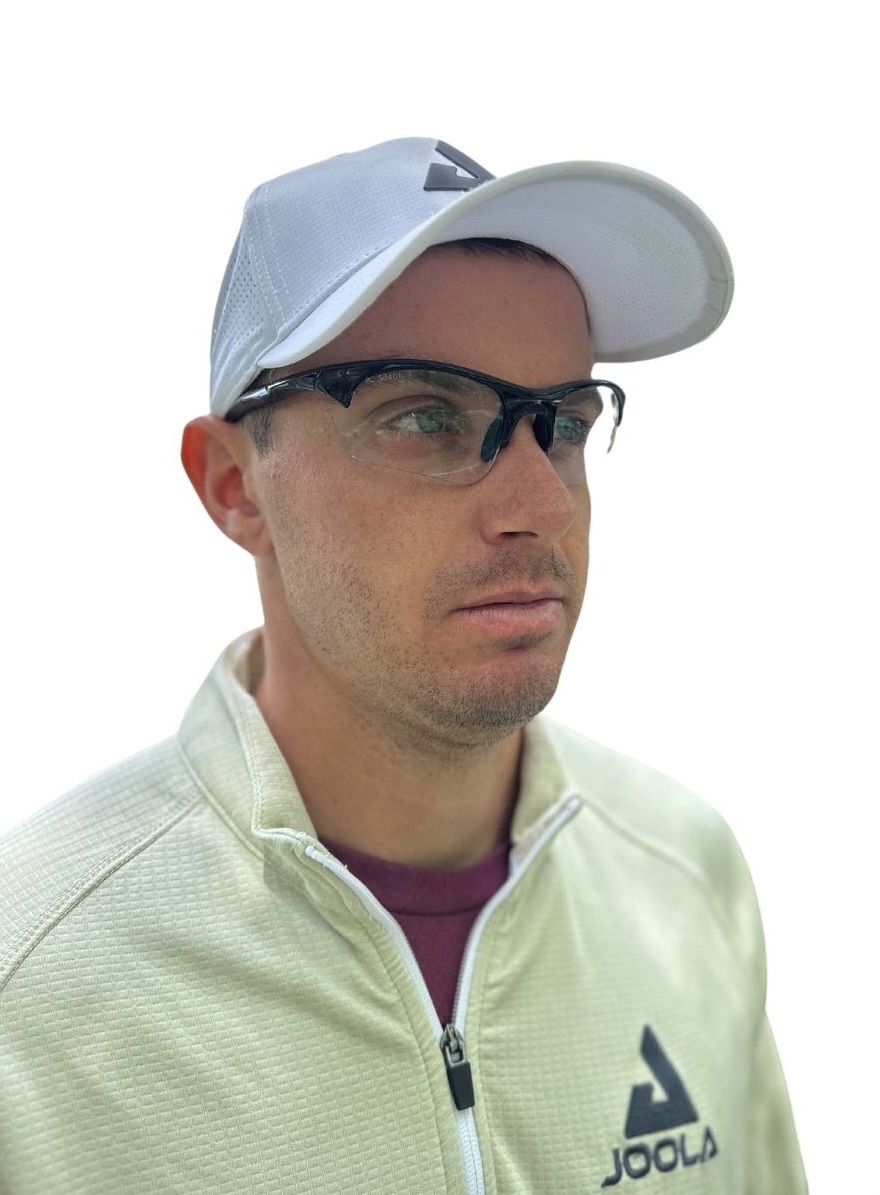
(player wearing protective eyewear)
Pickleball is a reflex-oriented sport, and sometimes a player’s reflexes may not match the speed of an incoming shot. Though the pickleball is lightweight, serious injury can occur if it strikes the eye at high velocity, especially from deflections by a partner, which are harder to avoid.
Ensure eyewear is shatterproof and protects the entire area around the eyes. Prescription glasses or sunglasses can be designed to serve as protective eyewear, and frames without lenses that offer adequate coverage are also suitable.
Protective eyewear is commonly used in sports like racquetball or squash, and there is a wide selection of appropriate equipment available.
While wearing protective eyewear is ultimately a personal choice, educating players about the risks and benefits should be a priority for the coach.
Tripping Hazards:
Pickleballs do not compress easily, making them a significant tripping hazard. Always alert players to any balls on the court, especially those that roll underfoot or come from unexpected directions, like behind them. If multiple balls are in play during a drill or game, halt play if an underlying ball presents a risk.
Staying vigilant about keeping the court clear of hazards should be a top priority to avoid unnecessary risks.
During tournament play, it is often required to keep the area clear of all objects except drinks and towels to eliminate tripping hazards.
Using Props During Lessons:
When using a basket of balls, remind players of its location and instruct them to stop if they are heading toward the obstacle.
Ensure ball hoppers, tubes, cones, bags, or other potential hazards are placed outside of any in-play areas.
Using targets in lessons can be beneficial, but certain types, like cones, can pose tripping risks if they are in-play. It’s safer to use flat targets like rubber lines or dots that lie on the court surface. Cones and other raised targets should only be used outside the playing area.
Replacing Grips:
Pickleball can lead to perspiration, which makes the paddle grip slippery and increases the risk of losing hold of the paddle. This can be a serious safety hazard, especially given the close proximity of players. Grips should be replaced regularly, and players should be aware of the potential danger. Overgrips provide additional tackiness and absorbency, making them a good option to enhance safety.
Water Breaks:
The coach should pause at appropriate intervals to allow players to hydrate, especially in warm environments. Ensure students have access to water. Be mindful that some players may tire more quickly, so the coach should monitor when it’s necessary to halt play for rest and hydration.
Make it a Group Effort:
While the coach is ultimately responsible for player safety, presenting safety as a group priority can be helpful. Encourage players to assist by pointing out or clearing pickleballs and other obstacles. Multiple sets of eyes are better than one, but the coach remains responsible for ensuring safety.
Reviewing the Playing Area:
Before beginning a lesson, review the playing area for safety. Ensure the court is not slippery due to moisture or foreign substances, such as dust, clay, sand, or leaves. Check the barriers surrounding the court. These barriers can be relatively close to the in-play areas, so ensure caution when approaching them. Point out immovable objects like columns or walls that lack padding, and ensure there are no sharp edges on surrounding barriers.